
Stop Cracks Before They Become Potholes.
Colorado Springs sees 40+ freeze-thaw cycles per year. Every crack in your asphalt is a water entry point — and water that freezes inside a crack expands with 25,000 PSI of force. Hot-applied rubberized crack repair is the fastest, cheapest way to stop that damage cycle before it destroys your pavement.
☀️ Don’t Let Summer Cracks Become Winter Potholes. Hot-applied crack repair before freeze season — free written estimate, same-week scheduling available.
Call (719) 285-9736A $200 Crack Repair vs. a $10,000 Replacement.
That’s not an exaggeration. A hairline crack in Colorado Springs asphalt is not a cosmetic problem — it’s a structural failure waiting to happen. Here’s the math: water enters the crack, freezes at night (Colorado Springs averages 166 freeze days per year), expands 9% in volume creating up to 25,000 PSI of pressure inside the crack, thaws the next afternoon, and drains deeper. That cycle repeats 40+ times per year in Colorado Springs.
In 3–5 seasons of untreated cracking, that hairline becomes alligator cracking, the base becomes saturated, and you’re looking at milling and resurfacing — or full reconstruction. Professional hot-applied crack repair seals the water out at the source. It’s the cheapest maintenance investment you can make on asphalt.
The difference between our crack repair and what you can do yourself: we use hot-applied rubberized crack filler — a material heated to 350°F+ that flows deep into the crack, bonds to both walls, and remains flexible through Colorado’s freeze-thaw cycles. Cold-pour products you buy at a hardware store sit on the surface, crack in the first freeze, and give you a false sense of protection.
Hot-Applied Rubberized Filler
Heated to 350°F+, flows deep into cracks, bonds to both walls, and stays flexible through Colorado’s extreme temperature swings. Not the cold-pour hardware store product that fails in one freeze.
Stops Water Entry at the Source
The entire purpose of crack repair is preventing water from getting into your base. Once water is in the base and freeze-thaw cycling begins, you’re on a countdown to structural failure.
Residential & Commercial
We repair cracks in driveways, parking lots, HOA roads, private streets, and any other asphalt surface. Same material, same process, same quality regardless of project size.
Done Before Sealcoating
Sealcoating over unsealed cracks is wasted money. Water continues entering through cracks regardless of how good the sealer looks on top. We always crack-fill before any sealer goes down.
Owner on Every Job
Oldan personally assesses crack severity and recommends the right repair method. Some cracks need filling. Others indicate base failure and need more than crack fill. He’ll tell you honestly which you’re dealing with.
1-Year Warranty
Every crack repair job is backed by a one-year warranty. If the repair fails within a year, we come back and fix it. No questions, no excuses.
Understanding Your Cracks
Hairline Cracks
Surface-level cracks under ¼ inch wide. Usually caused by UV oxidation and early freeze-thaw stress. Best case scenario — catch these early and hot-applied filler seals them completely. Most affordable repair.
Transverse & Longitudinal Cracks
Cracks running across or along the pavement. Often caused by thermal expansion and contraction combined with freeze-thaw stress. Hot-applied filler works well here — fills the crack, bonds both sides, stays flexible.
Alligator / Fatigue Cracking
Web-like pattern across a large area. This indicates base failure — crack filling alone won’t fix it. The failed base material needs to be removed and replaced. Oldan will diagnose this at the estimate and tell you honestly what’s needed.
Edge Cracking
Cracks along the edge of pavement — common where there’s no curb or edge support. Often caused by water infiltration and base erosion at the pavement edge. Hot-applied filler seals the crack while edge support issues are addressed.
Reflection Cracking
Cracks that mirror the pattern of old cracks or joints beneath an overlay. Common after resurfacing over a damaged base. Hot-applied filler slows progression but the underlying cause needs to be addressed long-term.
When Crack Fill Isn’t Enough
If cracks are wider than ¾ inch, if alligator cracking covers large areas, or if the base has failed — crack filling is not the right solution. You need milling, patching, or resurfacing. Oldan assesses and tells you honestly at the free estimate.
Our Crack Repair Process
Free Assessment
Oldan walks your pavement and evaluates crack type, width, depth, and extent. He’ll tell you exactly which cracks need filling and whether any indicate base problems that need more than crack fill.
Surface Prep & Cleaning
Cracks are cleaned of debris, vegetation, and loose material. A clean crack bonds better — shortcuts here mean the filler doesn’t adhere properly and fails early.
Hot-Applied Filler
Rubberized crack filler is heated to 350°F+ and applied into the crack. Material flows deep, bonds to both walls, and is tooled flush with the surface. Not cold-pour. Not a bag product.
Cure & Walkthrough
Filler cures quickly and can be driven on same day in most conditions. Oldan walks the finished repair with you. One-year warranty on all work.
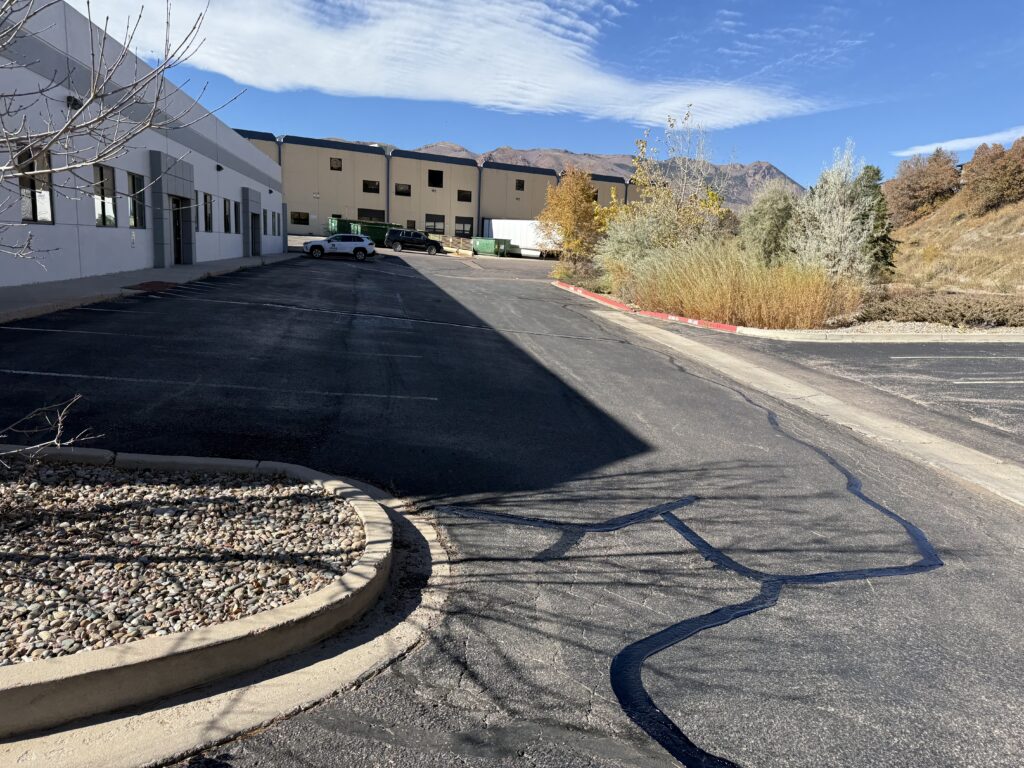
Why Colorado Cracks Faster Than Anywhere Else.
At 6,035 feet with 300+ sunny days and 40+ freeze-thaw cycles per year, asphalt in Colorado Springs faces conditions that destroy pavement 2–3x faster than the national average. UV radiation at elevation oxidizes the asphalt binder — the compound that holds aggregate together — making the surface brittle and prone to cracking.
Once the surface cracks, Colorado’s freeze-thaw cycles take over. Water enters the crack in the afternoon, freezes overnight at temperatures that regularly drop below 20°F, expands with 25,000 PSI of force, and thaws again the next morning. That cycle — repeated 40+ times per winter — progressively widens and deepens every untreated crack.
The window to catch cracks affordably is narrow. A hairline crack this summer is a pothole by next spring. Hot-applied crack repair done now is the cheapest maintenance investment you can make on Colorado asphalt.
Get Your Free EstimateWhat Does Crack Repair Cost in Colorado Springs?
Crack repair pricing depends on linear footage, crack width, and preparation needed.
Crack repair is the highest ROI maintenance you can do on asphalt. A $200–$400 crack fill job prevents $2,000–$15,000 in resurfacing or reconstruction costs. In Colorado Springs’ freeze-thaw climate, every season you wait multiplies the damage.
We always recommend doing crack repair and sealcoating together when the pavement warrants it. Sealing over unfilled cracks wastes the sealer — water still enters through the cracks. We fill first, then seal. Same crew, same visit, better result.
What we won’t do: apply cold-pour bag product and call it crack repair. If we’re on your property, you’re getting hot-applied rubberized filler that actually bonds, stays flexible, and holds through a Colorado winter.
Crack Repair FAQ
What’s the difference between hot-applied and cold-pour crack filler?
Hot-applied rubberized filler is heated to 350°F+ and flows deep into cracks, bonding to both walls and remaining flexible through temperature swings. Cold-pour products sit on the surface, cure rigid, and crack in the first freeze. In Colorado’s climate, cold-pour is a temporary fix at best. We only use hot-applied.
How do I know if my cracks need filling or if I need resurfacing?
Width and pattern matter. Hairline to ½-inch cracks are candidates for hot-applied fill. Alligator cracking (web-like pattern across large areas) indicates base failure — filling won’t fix it. Oldan assesses at the free estimate and tells you honestly which applies to your situation.
How long does crack repair last in Colorado Springs?
Hot-applied rubberized crack repair typically lasts 3–5 years in Colorado Springs conditions. The flexible formulation handles freeze-thaw cycling better than any rigid product. Combined with sealcoating, properly repaired cracks can stay sealed significantly longer.
Can I drive on crack-filled asphalt right away?
Hot-applied filler typically sets within 20–30 minutes in warm weather. We’ll give you a specific timeframe based on conditions at the time of your job. Most residential projects are driveable same day.
Should I fill cracks before sealcoating?
Always. Sealcoating over open cracks doesn’t seal them — water still enters through the crack regardless of how good the surface looks. We crack-fill first, let it cure, then sealcoat over it. Doing them together in one visit is the most cost-effective approach.
What causes asphalt to crack in Colorado Springs specifically?
Three main causes: UV oxidation at 6,035 feet makes the asphalt binder brittle faster than sea-level cities. Freeze-thaw cycling (40+ times per year) forces water deeper into small cracks with each cycle. Thermal contraction during Colorado’s rapid temperature drops creates stress cracks perpendicular to the pavement direction.
Do you repair cracks in commercial parking lots?
Yes — commercial lots are a significant part of our crack repair work. We can work in sections around business hours, prioritize high-traffic areas, and coordinate with sealcoating and striping for a complete lot maintenance package.
How much does crack repair cost compared to waiting?
A typical driveway crack repair runs $150–$400. Waiting until cracks become potholes requiring patching adds $500–$2,000. Waiting until base failure requires resurfacing or reconstruction adds $5,000–$20,000+. The math is clear in Colorado’s freeze-thaw climate — repair early.
Areas We Serve

Oldan Jones — Owner & Operator
Crack repair is where most contractors cut corners — cold-pour product, no prep, in and out fast. That’s not how we do it. Oldan personally assesses every crack repair job, uses hot-applied rubberized filler on every project, and backs every job with a one-year warranty. If it’s worth doing, it’s worth doing right.
Get Your Free Estimate Today.
Hot-applied rubberized crack repair for driveways, parking lots, and commercial properties across Colorado Springs. Owner on every job. Written quote. No pressure.
(719) 285-9736 Get Your Free Estimate ⭐ 5-Star Rated · Registered as a Colorado LLC and Insured · 1-Year Warranty · Colorado Springs, COCrack Filling & Asphalt Repair in Colorado Springs.
Hot-applied rubberized crack filler stopping freeze-thaw damage before it becomes structural failure.
Wondering about cold-weather timing? Cracks are widest when pavement is cold — see winter crack sealing in Colorado Springs.